
New World a-Coming, Ch. 17
Monterey, CA, Autumn 1936|

Ani Hamim Gassion speaks:
I don't remember Pacific Biological in the ‘30s very well, but I do remember a sense of wonder. The Row was a remarkably mundane looking place, all salt stained worn board and bat construction, tin roofs, concrete block foundations. The roads, even the main drag, were pitted and most of the side streets were sand. The storms blew in periodically and the fog hung cool over the rooftops well into the day.
I came there trying to get myself and my little boy away from the boom of the city. There was a single bus that ran twice a day south from the Presidio, once in the morning and once in the afternoon, and it would put you in Monterey by around noon or in the midsummer evening. The people who Steinbeck describes were actually there, even though some of them were more mundane and others considerably more colorful even then he included. We didn't really move in Steinbeck’s circles—it was clear that those writers and thinkers had their own interests and conversations—but our son very much liked Ed Ricketts; he felt understood I think.
The first time Tommy met Ricketts was when he encountered Ed coming up from the beach very early one June morning; Tommy was so energetic a little boy that it was hard to keep him in bed once the sun came up. Some of the Row got up early--mostly the cannery workers who came down the steep dirt side streets from up the hill--but some of them, and Steinbeck and the artists were among them, tended to go to bed late and rise later.
I remember that Tommy came back that morning saying he'd met a very interesting man with a beard and a hat who came out of the harbor and showed him the animals he had in a bucket full of seawater. A little later, after I'd had some coffee, I decided to walk down and make sure that whoever it was Tommy met was on the up and up. So we did that and we came down the row to the slip where Tommy said he'd met the bearded man which was really just a laneway between two wooden buildings worn by the salt air had a little rocky beach that the tide came up.
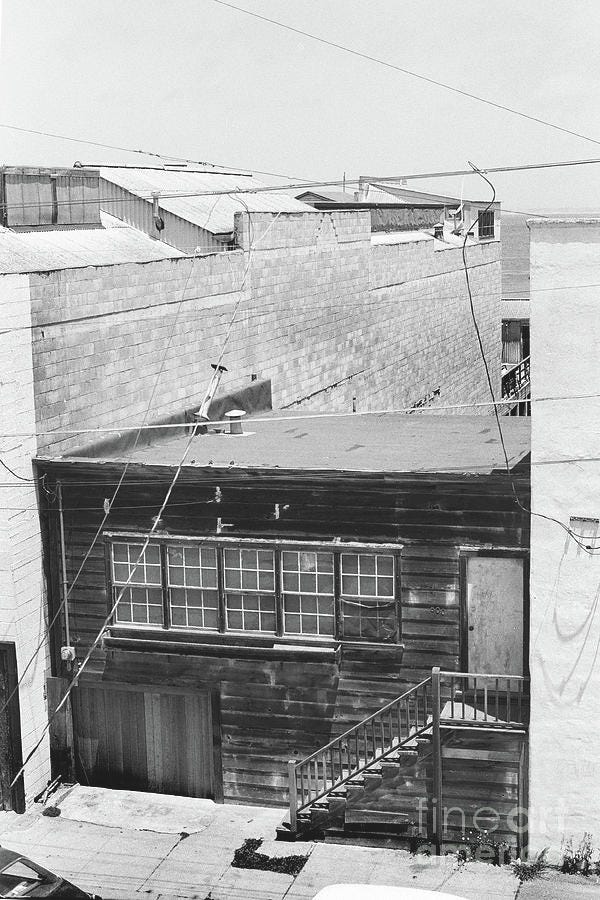
To the left, there was a brown wooden building with a set of concrete steps that led up to its first floor; underneath, you could see the pilings that the building sat on. There was a little sign, hand-lettered by someone who knew what they were doing, to the left of the door at the top of the staircase: “Western Biological.” Tommy said that after talking to the bearded man he had gone up the stairs and into this lab. So I grasped his hand and we went up the staircase together; the ordinary wooden door at the top was ajar and I could feel the sea breeze blowing through the house, carrying the smell of kelp and saltwater. I knocked on the door jamb but there was no answer. Tommy fidgeted his feet and said “Mommy, what if the man is not here right now?” I knocked again a little harder but there was still no answer. Then a voice spoke from behind and below us; a gravelly voice that sounded like a habitual smoker’s, with an odd accent:
“Looking for Ed? I think he might be out in the South Bay.”
I turned, still holding Tommy's hand so that he didn't tumble down the stairs, and look down to the sidewalk; there was a tall fellow down there with, with quite swarthy skin, and thinning black hair brushed back and a mustache and goatee—he looked like one of the artists we would see around town. He had on spectacles and he was wearing a worn work shirt and khakis with paint splashes on them, and he had a bundle of bound reports under one arm. I think I noticed even then the kindness in his eyes.
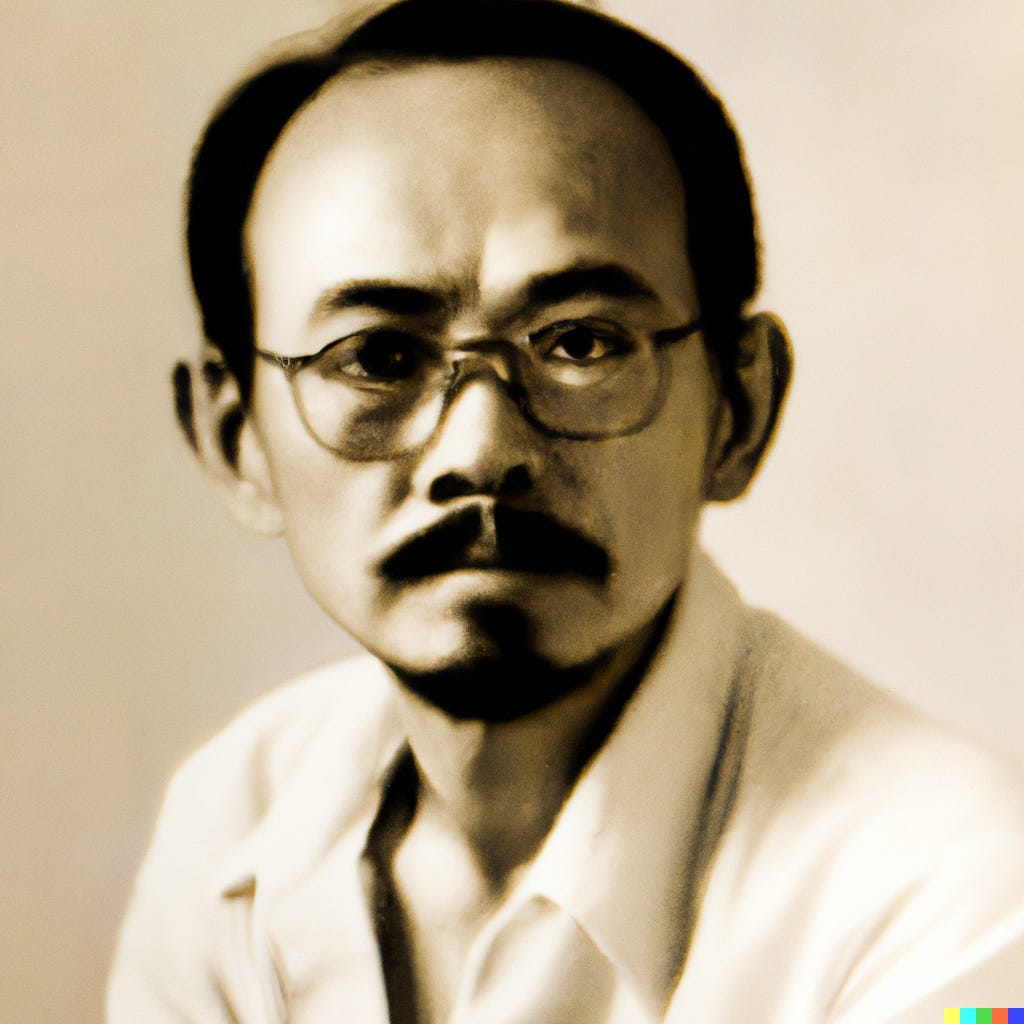
“Yes, I guess that's who I'm looking for. My son here met a man with a beard who showed him some sea animals this morning and I thought it might be nice for us to introduce the family more properly.”
The tall man smiled. “That sounds like Ed. He does like to tell people, especially youngsters, about things, especially from the tide pool. if you like, we could step over the way to La Ida, and I’ll buy you both a piece of pie while we wait for Ed to get back; shouldn't take long.
“My name’s Malachy. But you can call me Abe.”