
New World a-Coming, Ch. 21
Monterey, California, October 1936

[From Discovery: A Memoir by Ani Hamim Gassion, pub 1980, Ballyizget]
It was a good party, even if it wasn’t quite like the kind of things that Steinbeck described in his books about Ed. The lab was a funky little place, board and bat construction, tin roof, not much in the way of insulation, and the wind certainly did whistle through on the cold foggy Monterey nights. But there was a good wood stove, as long as you stayed away from the hot stove pipe, and the conversation and the hospitality were so good that you felt warm and welcome regardless. Steinbeck wasn't wrong when he said, describing Pacific Biological, that there were some nights when there were 30 or 40 people crammed into the little front room.
But this party this night in October wasn't nearly as rambunctious as you might think, not least because a lot of these people were accustomed to living in small spaces without a lot of furniture and to filling up the space instead with the quality of their thought and talk. Ed kept people out of the lab proper, and he would lock things up if he thought a party was going to get out of hand; but usually the party would kind of creep up on you. You'd hear that someone like John S, or Joe Campbell, was in town, and you'd know that you could probably catch up with them at the lab. Even if they weren't staying with Ed, they’d usually wind up there, because the reason they showed up in the first place was for the quality of his talk and the warmth of his engagement.
He always had good music running on his photograph, and there were a lot of records that none of us would have heard otherwise: not just European classical music, but lots of ancient music, and sometimes—when Henry Miller was in town and had brought a new record—music from other places around the world.
Abe met me at La Ida, so we could drop Tommy off with the girls—sorry, the women—at Fauna’s, and then we could cross the street to the lab. The sun was already down, on the horizon of the harbor that was hidden to the west by the 2- and 3-story buildings of the canneries along the Row, and the little brown board-and-bat of the lab nestled between them; the fog was rolling in and dark was settling down fast. It’s funny: I didn’t think of myself as a shy person, necessarily, but I wanted badly enough to find a way into this circle that I found it comforting that I had Abe: someone with whom I could walk into this party. And it was a little dark and a little dim, even though, behind the blinds of Ed’s windows, there was lots of light, and the front door at the top of the exterior staircase was open and you could voices and music—the plainchant from Ed’s phonograph booming out into the mostly empty street.
Ed smiled at me, and hooked my arm through his, and we stepped down off the curb in front of Fauna’s, just as the streetlights along the Row starting blinking on in the dusk. And we were about halfway across the street when I realized that there was a man standing in the shadows just inside the open first floor carport to the left of Ed’s stairs. I couldn’t make him out very well, but he was tall and wide, and he seemed to be holding something in his hands. I flinched, I didn’t know why.
Now, looking back, I think it might’ve been because seeing that man in the shadows made me flash back, in my mind, to a bad encounter I’d had before I ever met Bill or came West. I’d tried to put it out of my mind, and I’d been young enough that I couldn’t really remember it—not even now. But I knew that unfamiliar men, standing in the shadows of a nighttime street, were bad news.
Abe must have felt me start, through our linked arms, and I saw him turn his head and look down at me, his eyes in shadow. He smiled a little, just at one corner of his mouth, and squeezed my arm with his elbow, and then he turned and called across the street.
“Well, Colonel? New records for Ed’s phonograph?”
The man in the carport stepped out into the harsh light of the streetlamp. He had a broad-brimmed hat on his head, and I couldn’t make out his face, but I could see that he was tall, and broad-shouldered, dressed in a dark suit. He had a bundle of phonograph records under his left arm, though his right hand hung free at his side. At the sound of Abe’s voice, I saw the flash of a white-toothed grin under the shadow of the hat brim. The right hand slipped something up under his armpit, under his jacket, and then he took off his hat under the glare of the lights, raising it over his head like an old-time cavalier salute.
He had dark skin, and the harsh light etched shadows under his brows and cheekbones. He had a beard and mustache like Abe’s, but longer, and thicker, and with more grey in them. His long hair, which hung to his shoulders, was streaked with grey as well. He transferred his hat to his left hand, still clutching the record albums under his elbow, and held out his right. Abe took it, and they shook, and Abe said,
“Didn’t expect to see you here on the Rock, Colonel—the last communique from the News Service had you in Ballyizget?”
The Colonel smiled—though the smile did not touch his eyes—and he replied, in a baritone voice with a pronounced Spanish accent, “Had to travel far and fast, and via the bumpy road, to get to my friends out here quickly, Abe. There’s news, and there may be visitors coming.”
For a moment, I felt Abe’s body become very still, and then he carefully and gently disengaged my arm from his elbow. But there was no change in his tone when he said, “Oh, yes? Well, then you and I must find time to talk. But first, let me introduce you to my new friend, Ani—she’s just arrived, like yourself, and I thought we’d introduce her to Ed.”
The tall Colonel turned and looked down at me. Even bareheaded, his face was in shadow, but I somehow felt warmth and friendliness. He put out his hand, and I took it, and felt a brief electrical shock. His palm was roughly calloused, and though his touch was very gentle, there was tremendous strength there. Still holding my hand, and smiling down at me, he said, “I’m glad to meet any friend of Abe’s. Let’s go up and find Doc.”
And we went up the staircase of Pacific Biological, and went in through the open plank door to the damp warmth and noise of Ed’s party.
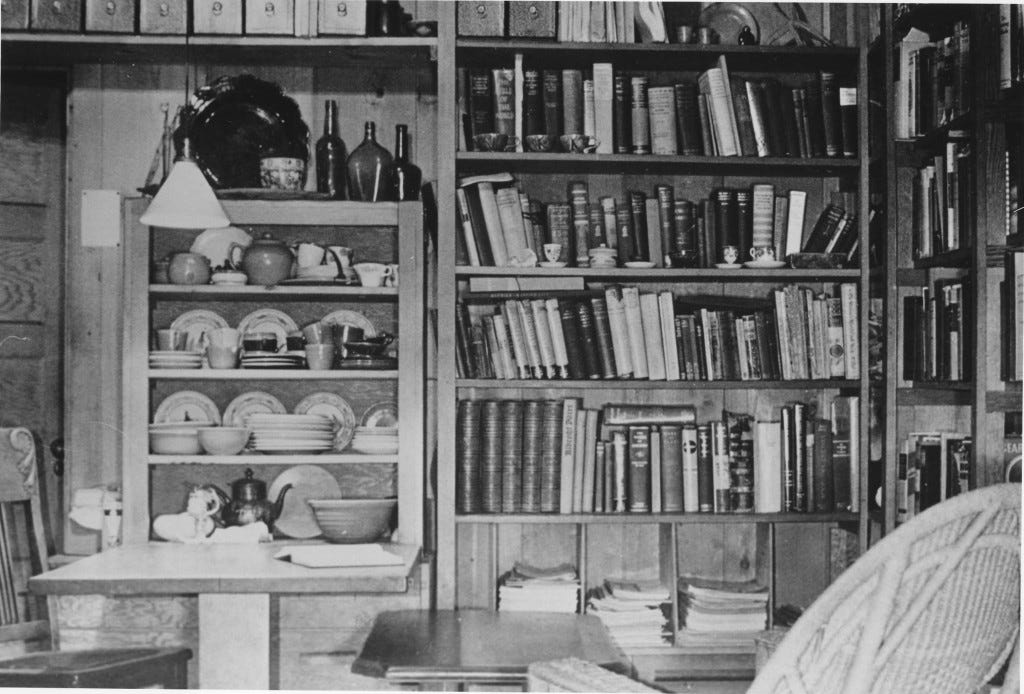
Ed loved to read, and he loved to read aloud, and sometimes that would be the extent of the party: people pulling books off the shelves, finding passages they liked, and reading them out to one another. Most of the writers were too shy to read their own work—certainly John was, he was way too possessive and way too sensitive to put a new piece of writing out in a crowd of people he didn't know very well; but Ed would do that sometimes, particularly when he was revising one of his essays. He was an interesting man—a real autodidact who taught himself things that interested him even if they were beyond the necessities of his professional occupation. There were holes in his reading as well, and he always insisted that that's one of the reasons he liked having readers as friends: because they could point him to new items that they'd recently encountered.
Ed never had much money and he worked all the time, so when people did come to the parties, they tried to make sure that they brought a bottle or a covered dish or something to contribute to the smorgasbord. Ed could have shopped at one of the big markets in Pacific Grove, but he always took the stance that having a billing account at a market like that would just tempt him to live beyond his means. Especially when he was just cooking for himself, he liked being able to just walk across the street to the Wing Chong grocery that Yack Yee ran, and buy rice or tomatoes or canned beans, and always lots and lots of beer. I think that's actually how Ed managed his beer consumption: he made a point of setting things up so that if he wanted another quart, he had to get up out of his chair and walk over to Yee’s.
Anyway, this party wasn't very rambunctious; in fact, people mostly sat and listened to Ed's records, and read books, and drank beer, and weighed in on the conversation between John and Ed, or just sat and listened to the flow of their talk. John was a good man I think, and I actually think his admiration for Ed brought out the best sides of him. But John could be a little depressive, or a little jealous, or a little competitive, or a lot preoccupied because he was always thinking about his writing. He was also particularly responsive to women, but not quite in the same open way that Ed, whose face John famously described as half Jesus and half satyr, got on with women. Ed could be chatting up a girl, or a sophisticated professional woman, and the quality of his attention—the degree to which he engaged with them and listened to them and made them feel the focus of his attention—got more women into the backroom on the cot with the Indian blanket than was the case with a lot of the more ostentatious ladies’ men who also came through the Row.
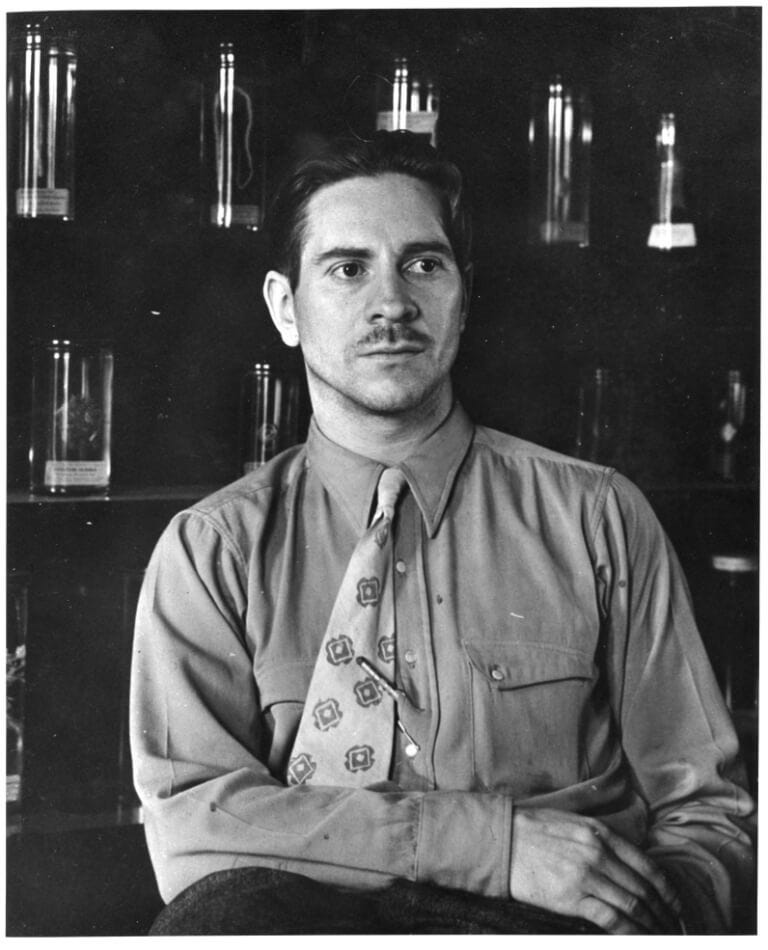
In case you're wondering: no, Ed and I never slept together. Not that I wouldn't have: he was a handsome, kind man, and he liked to make women laugh and feel good, and that kind of thing is damned attractive. But I think even at that age, i knew that he was a little old for me, and that maybe—coming off of that first marriage, he might have been a little bit damaged in ways that I couldn't help, especially because of my own drama with Tommy’s father.
Actually, in contrast to the way he’s portrayed in John’s books, Ed was a somewhat reticent man, and he was never the center of attention at one of his own parties. But you could tell that a lot of the people who came found him fascinating and they definitely sought his approval.
At this party, I remember, John and his wife Carol were there—Carol was the model for the Cannery Row character Tom Talbot's wife Mary, about whom Steinbeck wrote, “her great grandmother had been burned as a witch.” Which is a quintessential kind of Steinbeck move: to find the mythographic and the archetypal in the behavior of a tidepool, or a group of Mexican American paisanos, or in Ed himself, or in his own fictionalized wife, and maybe to romanticize them beyond what the subject themselves might recognize. I always thought that it might have been damned exhausting to be married to John: not so much because he was still pretty broke, in 1936—we all were—but because it’s true that he didn’t pay nearly as much attention to his marriages as he did to his writing. There’s a certain kind of writer who has to be a certain kind of ruthless, refusing even to permit relationships—on the upswing or on the downturn—get in the way of the daily output.
I don't think Ed's son was back living at the lab yet, but he’d already split up with the boy’s mom Nan: she had left and gone back to Chicago with their two daughters. So there he was in the lab by himself: he had that cot and a little two burner stove and an ice box and that was about it.
But the first thing I noticed, on this first visit to Pacific Biological, was the books: not just the technical and scientific manuals, and his collection of offprints and separates which detailed topics in biology, especially Pacific tidal ecologies. Even just a scan down the spines of the books on the rough pine shelves over his cot gave you a sense of Ed’s intellect and the breadth of his curiosity. I think he lived in his own head much, much more than most people—including Steinbeck—realized. There were all kinds of cornerstones: biographies of Lincoln and Lawrence of Arabia, Albrecht Durer and Arthur Koestler. And there was lots of western philosophy.
But he also had a good collection of anthropology, particularly things by Margaret Mead and Bronislaw Malinowski, and all kinds of narrative: Hemingway and Dos Passos, and the Canterbury Tales and Shakespeare and John Donne and John Millington Synge. And he read Trotsky a lot: he was surprisingly knowledgeable and insightful about how the modern world worked. He liked poetry and kids stories, everything from Blake to Baudelaire to Rudyard Kipling to Robinson Jeffers.
I think the thing that I noticed the most and which I actually believe was particularly crucial to Ed's thinking and maybe to the influence of that thinking upon the people in that Monterey circle was his reading in Hindi and Chinese poetry. He knew the Tao-te-Ching of Lao-Tzu, and he read the classical Chinese poets, particularly Tu Fu, who I later found out was an influence on Snyder as well. I don't think everybody necessarily recognized, on the basis of the portraits that Steinbeck and even some of Ed’s surviving friends supplied, just how deep he was as a philosopher. But I think that's what people picked up on, even if they didn't realize it.
We were listening to records: that was the one part of a party which Ed always wanted to stage manage. I remember Monteverdi and maybe some Victoria polyphony as well, and of course Ed’s favorite performance of The Art of the Fugue by E Power Biggs. But he also had some Stravinsky and Sibelius and he even had some recordings of Indian music: the first I’d ever heard that. And the Colonel had brought those discs in thick plain grey cardboard sleeves, no labels on them, that Ed was obviously anticipating.
We sat, and listened to records, and I half listened to John and Ed talking about all the ways they thought Bach’s music represented a kind of sublime logic. They were kind of charming to hear when they talked about music, because they didn't really know very much but they had that wonderful quality of the avid amateur who was prepared to find genius in performances or compositions that the rest of us trained musicians might simply miss, or dismiss.
There was beer, and later on a little whiskey, and Ed had made up a horse meat chili: not the kind of thing I'd ordinarily want to eat, but Ed had a pretty good way of articulating that the horse was already gone and that it would be OK if we ate its meat so that the horse returned into the ecosystem. And I have to admit that Ed’s chili—which in addition to horse meat also had beans and I think seaweed and lots and lots of curry powder—was unique, and went down uniquely well with the beer that kept coming over from Wing Chong grocery.
And there was a girl there. I think, once I noticed her, my usual attention to all the goings-on of a Pacific Biological party kind of faded away.
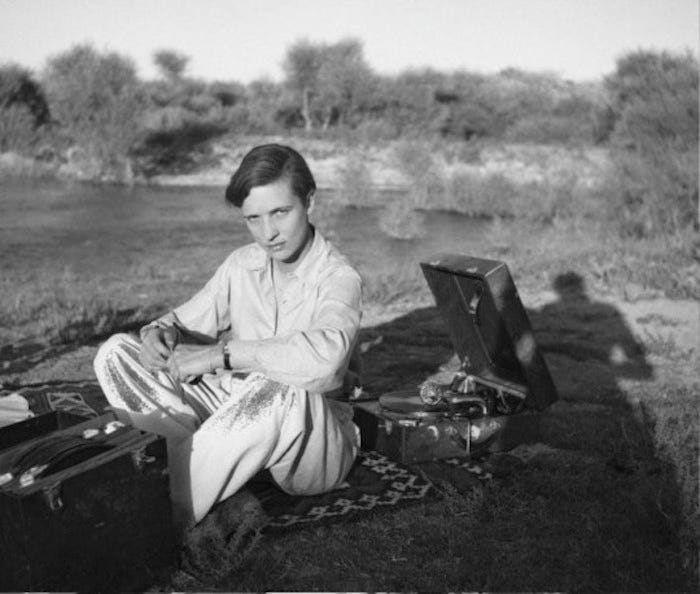
She wasn’t an extroverted person and unlike a lot of people in those circles she didn’t talk a lot. But she wasn’t a shrinking violet either. She was small boned, like Ed, and she looked strong, also like Ed. And I noticed that, very unusually for a woman at that time, she had a tattoo on the back of her left forearm. It looked a little bit like a bird, done in calligraphy. I could only see it because she was wearing a man’s white dress shirt with the collar open and the sleeves rolled up to her elbows. She had on khakis, and I could tell that she had been helping Ed work with specimens because there were fish scales and squid ink on the trousers. She wasn’t wearing shoes but she had a pair of thick wool socks pulled up over the cuffs of the trousers; when she came in, I’d seen her take off a pair of rubber boots on the landing and leave them next to Ed’s—I guess I was noticing her even then, at the very start of the party. She moved around the lab as if she knew the space well and had spent a lot of time there, and she wasn’t shy about going into the backroom, where the specimens were, to bring out more beer from Ed’s old ice box.
But at the same time I had the sense that she wasn’t one of Ed’s conquests; I don’t know why I thought that, because Ed didn’t really have a type or a not-type, although an awful lot of the women who came through the lab were younger than he and a little bit starstruck, I think. It was more just how she carried herself, and the way that she spoke—when she spoke at all—about Ed and the collecting work she was helping him with that autumn. Or, come to think of it, maybe I presumed she wasn’t with Ed because I wanted her not to be.
At one point I went back to the backroom myself, when I saw she was fetching more beer, because I hadn’t yet had a chance to talk to her and I’ll admit I was curious—or that’s what I thought I was feeling. When I came through the door, which was covered with another one of Ed’s ragged red woven Indian blankets, she was bent over at the old wooden ice box with the door open, filling her arms with quart beer bottles.
Now I have to say something here. I wasn’t a shrinking violet either, and I had been away from home long enough that I’d seen a lot of different ways for people to be in the world. Tommy’s dad was a good man, and he was good to me, and he made me laugh, and I liked making love with him. But when he went back east, I realized that I probably didn’t love love him, and I was damn sure not going to move back across the country to a place I didn’t want to be, far away from California.
So when Tommy and I came to Monterey, I was trying to find a situation that would keep me in the Bay Area but that was a little more affordable and maybe had a more relaxed pace of life than San Fran itself. Being around Ed and his crazy circle of artists and writers and researchers wasn’t exactly relaxing, but I did feel peaceful, there, and with Ed. I might have taken up with Ed if it were going that direction but it didn’t seem really to be happening.
And that was OK—his life was complicated and he was leaving one marriage and seem to be heading in the direction of another one. There were lots of men around and some of them were interested in me, but no real spark had happened with any of them to that October of ‘36. And I had a little boy, and was looking for a job, and maybe that put some of those guys off as well.
So when I came into the backroom of Pacific Biological lab and saw Rina leaned over filling her arms with bottles of beer, I was almost surprised by how much I noticed her body. She was short, as I’ve said, but she had strong shoulders in the white shirt, and she was definitely a girl underneath the khaki trousers.
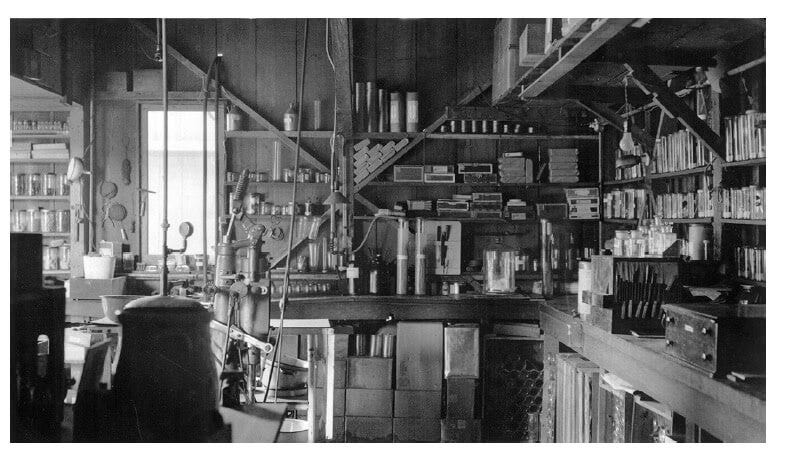
I’m not even sure if at that date I’d realized that I was pretty strongly attracted to women also. I’d had some experiences in high school, and California by the time we got there in ‘32 was way more tolerant than some other places, I guess. But standing in that smelly little backroom, between the bare wooden shelves lined with one- and two-quart glass jars full of biological specimens in formaldehyde and alcohol, with the additional smells of kelp and sea water, and cigarette smoke and noise coming from the front room, I was conscious in a way that maybe I never had been before of this olive-skinned, curly-haired young woman’s physical presence. She stood up from the icebox, her arms full of beer bottles that were sweating from the cold, and kicked its door shut with her heel.
But as she turned to head back to the front room, we almost collided. I realized that I had been standing a lot closer, watching her, than I thought, and I found myself looking into her face from only about a foot away. She had dark dark blue eyes, long black lashes, and pronounced thick eyebrows. I noticed that there was a second tattoo behind her left cheekbone just in front of her ear, although in that moment I didn’t yet know what it was; it would take another night, and an even closer proximity, for me to get to know that tattoo and all that went with it, and with her.
I’m not sure what she saw when she looked at me, but it felt as if my pupils were dilating as she looked into my eyes, and even in that moment I could smell the perfume of her hair and skin. I think I stopped breathing for a few moments.
She stared at me for a moment, expressionless, and then a smile came, more in her eyes than in her wide mouth. She didn’t speak for a moment, that arm full of cold beer sweating in the close heat of the room, and I realized that the condensation from the beer was dampening and darkening her shirt: the white cotton clung to and outlined her small breasts. I felt a little as if I were hyperventilating, and my nostrils were full of her aroma, driving out the other more acrid chemical smells of the lab.
Then she said, still smiling, “Here, help me carry these out to those characters in the front room.” I took two of the quart bottles, one in each hand, and as I did so the back of my right hand brushed against her damp shirtfront. In that moment I think I felt her erect nipple.
I flinched and took my hand away quickly, and looked again into her eyes; I realized that I was still standing very close. She smiled again, and leaned closer to my face, half closing her eyes; I thought she might be about to kiss me, and closed my own, half fearful and half aroused. But instead of a kiss, I felt her brush the tip of her nose across mine—it felt paradoxically enough even more erotic and intimate then the kisses I had sometimes shared with high school chums. I opened my eyes to see her looking into mine from a few inches’ distance: she was so close that I could not see the rest of her face, but I felt as if I was falling into those blue blue eyes. I saw the smile come back into them, and she said quietly, “You smell nice.” Then she straightened a bit and grinned more broadly and with a little bit of deviltry—her arms still full of beer—she nudged her shoulder against mine.
“Come on,” she said. “Let’s get these delivered to those crazy characters in the front room, and maybe snag a couple for ourselves, and take a walk on the beach, away from their noise.”
Which we did.