
New World a-Coming, Ch. 20
Meeting Hazzard-Igniti

Autumn 1936
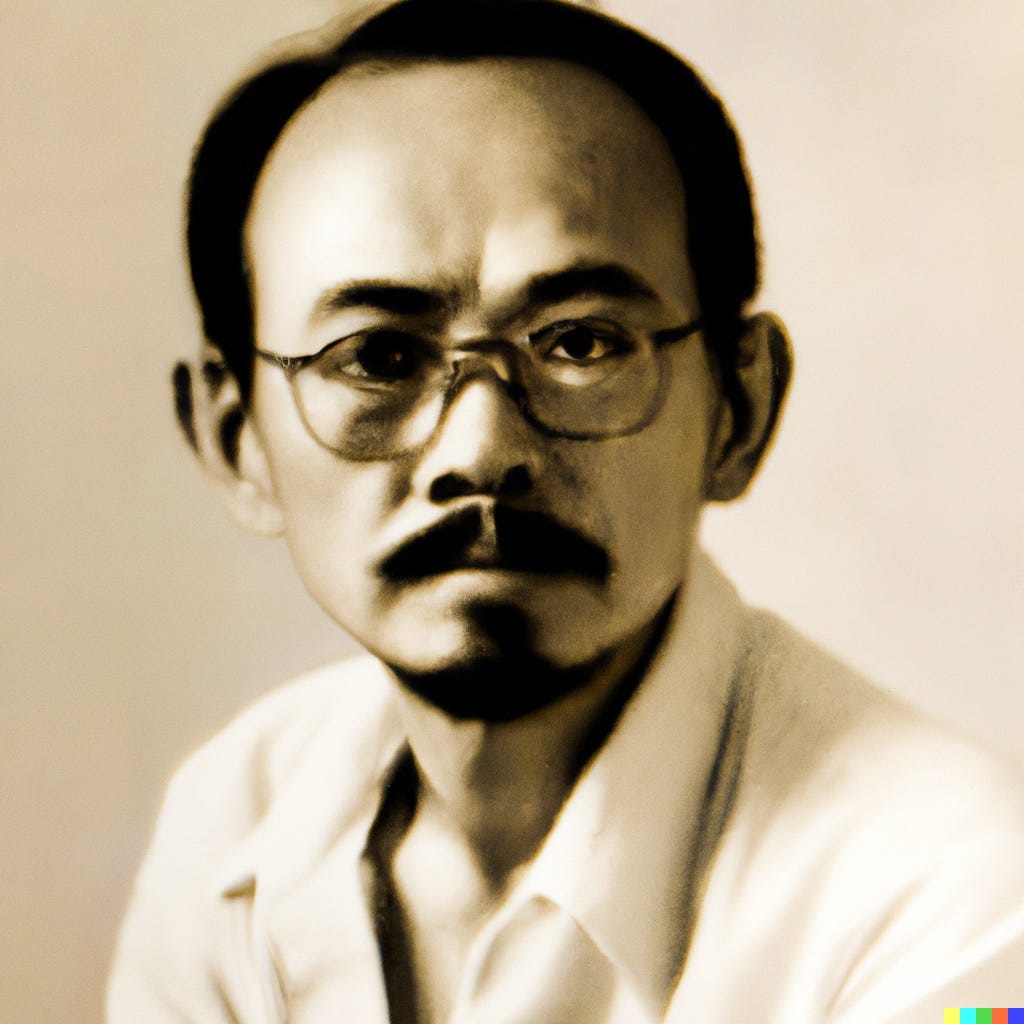
Tommy and I sat with Abe at the counter of the cafe called Fauna’s, diagonally across the street from Pacific Biological. I got Tommy set up with a slice of apple pie and some melted cheese and he busied himself getting as messy as he possibly could with it. Meantime I sat with Abe and we talked further as we waited for Ed to get back from his collecting trip. I actually felt glad that Ricketts was delayed, because I had more time to get to know another person from town, the first who I’d found interesting, and who was part of this “Doc’s” Pacific Biological circle. And this tall olive skinned man with the unusual light gray eyes and dark hair and the olive skin and the indefinable eastern accent was easy to talk to, and I didn't feel nearly as uncomfortable about the physical thing as I sometimes did with other men in my age group.
I told him about Tommy’s dad, and having moved to San Fran with him so that Bill could go to school at the Art Institute. And I talked about where we lived, near the campus on Chestnut Street, surrounded by artists and students who were sharing flats up and down the steep hills, and about my first tentative voyages of discovery around North Beach; about hearing the sea lions barking on nights when the fog rolled in; and hearing the bells of the Norwegian Seaman’s Church in the early morning; about finding the little cheap Italian places on the side streets, and learning to eat spaghetti and drink red wine in them, with Bill’s artist friends. As I talked, sitting at the counter of La Ida, I realized I knew SF, the town and its neighborhoods better than I thought.
And I talked about Bill, and the work he did, and how exciting it had been to make the move from Chicago to the west coast, and about how much harder than expected we’d found it to be. And how, even if I hadn’t been a new mother, with a baby to care for, and Bill trying to feed a family of three on a grad student’s stipend, I still would have wondered what might happen to my goals, especially as a writer. There didn’t seem to be enough time or energy in any given day. And how, when Bill told me he was going to give up his degree program at the Institute, and go back to Chicago, I just had this very strong instinct that I didn’t want to go with him—I didn’t want to wind up being some painter’s wife who kept the house and nursed his babies and maybe had to hold down a job, to support him, as well.
In contrast, Abe didn't talk a lot; he mostly listened, and nodded, and I felt like I was saying things that resonated—as if he understood and empathized even though I wasn’t being very articulate. But I did I learn that he'd been born out east in a country I'd never heard of and had come to Berkeley in the 1920s to study physics and quantum mechanics. He didn't exactly wear his credentials on his sleeve, but I could tell that he was an intelligent and well written man, and he certainly did seem to have traveled and reflected a lot. In fact, we started talking about time and some of his own reading in both western and eastern thought and about ways that time might work. I mentioned that, coming from Chicago, I had encountered some of Dwight Goddard's Buddhist Bible, and that my father had actually been at the World Parliament of Religions in 93. Abe didn't say much to that, but he smiled when I mentioned the Columbian Exposition, and nodded as if he was familiar with the time and the place.
We drank our coffee and I stole enough bites from Tommy's slice of apple pie that he objected and said “Mama don't eat my pie!,” at which Abe smiled and said, “That's OK young man, we'll get you another piece while we wait for your friend Professor Ricketts.” He nodded to Eddie, the bartender at La Ida, and Eddie brought another piece of pie and refilled our coffee cups.
Abe took a sip of the fresh coffee and then turned back toward me, leaning one elbow on the bar, his long fingers intertwined. I felt amazingly relaxed around this man I had just met; as I say, I think it was partly because I didn't feel that I had to behave a certain way or feel nervous about what his intentions might be. He was friendly and he felt safe, and I didn't feel like he was going to suddenly get handsy.
“So why did you make the move down here specifically? There's not much to do and it's pretty darned isolated. Hell, there’s not even enough work.”
I didn’t answer right away. To be honest, I was afraid I’d sound incoherent, because I didn’t really know why I’d left. Just that I couldn’t go back and be someone’s wife—at least not only that. Finally I said,
“Well, when Tommy's dad went back to Chicago, I knew I didn't want to go back there, but I also didn't think I could afford to stay in North Beach. I got to know some of the writers, particularly the people who were interested in eastern languages and in politics. Do you know that fellow Rexroth? He's an interesting man and he certainly has lots of contacts. One time he took me to Japantown and we bought art prints—or, he did—and drank sake.”
Abe nodded and smiled: “Matter of fact, I think Ed’s got at least one or two volumes of Rexroth at the Lab.”
I thought about that for a minute, coming back again—as I did perpetually—to what it might be to actually make a living as a writer. Abe waited. Finally I went on.
“But it's really too expensive for me to live up there, and I wanted to get Tommy out of the city, and I wanted to be nearer the open ocean in a quieter place. I've got a friend who runs a bar called Mona’s up in North Beach on Union Street and I suppose, if I can't find something down here, we might have to move back so I can tend bar. But I don’t really want to: I like the writers and musicians down here, and it’s quiet, and it seems like they've learned how to live on not very much money. I was thinking I could maybe get work typing for someone; I typed all of Bill’s lecture notes and gallery notes. And I'm pretty good and pretty fast and I'll work cheap.”
Abe nodded thoughtfully.
“Well, there are an awful lot of writers down here—or at least people who call themselves writers—and more coming all the time, seems like. I'm wondering whether you might be able to find work as a stringer for one of the South Bay newspapers. There's lots going on, especially with the migrant workers’ strikes, and there’re going to be a lot of reporters who need a local contact.
“I might even be able to use you on some things myself. I've got a little bit of money for an assistant, from my government, and I've published a few things in the scientific journals, Ed has too. It's not very much money, but at least we both have steady income, and you could probably count on the regular work.”
There was still no sign of Ed, and I could kind of feel this conversation winding down. I actually felt a little panicked: here I had finally met someone on the Row who was friendly but didn't seem like a wolf, and had friends and ideas of the sort that I wanted for myself and my son, and I didn't want the conversation to end. I was racking my brains to try to quickly think of another topic to keep talking, but before I could, Abe, seeing that Tommy had finished up his pie and was absorbed in dabbing up the crumbs and licking his fingers, Abe slid off the barstool and stood up; my heart sank.
But then he smiled at my son and said, “It's the simple things, right young man? It doesn't really take very much to be happy, if they're the right things.”
Then he looked at me. “Look, maybe you should come to this little party that Ed’s having tomorrow night at the Lab. He tells me he's just got a new folio of Monteverdi records and he wanted me to come by and have a listen. And he knows that I'm good with electricity, and that phonograph of his is sometimes kind of persnickety.”
He smiled. “Would you like to come to this party? You could meet some of the locals, and Ed, and my friend the Colonel. I think the girls over at Fauna’s Place would look after Tommy, just for the evening. And that way you'd be right close by.”
For reasons I didn't quite understand, I felt a vast wave of relief; like I had arrived at a place that we might be able to call home.
“Yes. Thanks. I’d like that.”